Gaming Laptop · Microsoft Flight Simulator 2024
ASUS TUF Gaming F16 (2025) Gaming Laptop, 16" FHD+ 165Hz, Intel Core i5-13450HX, NVIDIA GeForce RTX 5050, 16GB DDR5, 512GB SSD
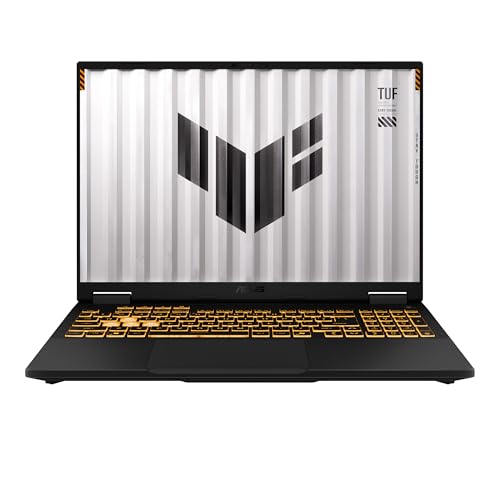
- Mid-Range
- RTX 5050 Laptop
- Core i5-13450HX
- 16 GB RAM
This page contains affiliate links. As an Amazon Associate we earn from qualifying purchases.
MSFS Performance Score
- GPU Performance60% 37
- GPU VRAM20% 40
- CPU Performance10% 75
- System RAM10% 50
GPU VRAM (8 GB) is below the MSFS ideal of 12 GB — a meaningful bottleneck in dense environments. Combined score: 42.7. How we score
Verdict for MSFS
The ASUS TUF F16 (RTX 5050) suits 1080p flying, where the laptop RTX 5050's 8 GB of graphics memory keeps airliner approaches smooth on the 16-inch 1920 × 1200 165 Hz screen. Spending more buys 12 GB of graphics memory and 32 GB of RAM for 1440p and VR.
Updated October 2026
Pros & Cons for MSFS
Strengths
- At 1080p the laptop RTX 5050 and its 8 GB of graphics memory cope with a busy airliner arrival into a big hub, and the 165 Hz panel keeps the view clean as you pan around the cockpit on short final.
- The 16-inch 1920 × 1200 screen gives more vertical room than a standard 1080p panel, so the full instrument stack and an approach chart fit on screen at once — and at 4.85 lb it still goes in a bag.
- The Core i5-13450HX is an HX-class (desktop-class power) chip, so AI traffic, live weather and terrain streaming around a dense hub have proper cores to work with as MSFS 2024 keeps adding world updates.
Trade-offs
- 8 GB of graphics memory is the ceiling: plug into a 1440p screen or fly a photogrammetry city with high textures and it runs short, and it falls under the 12 GB mark we treat as the VR starting point.
- 16 GB of RAM is only Microsoft's minimum and a 512 GB drive fills quickly with MSFS 2024 plus scenery, while a step up in price usually brings 32 GB of RAM and a 1 TB drive — and the listing doesn't say if the memory can be upgraded, so check first.
Full Specifications
- Graphics chip
- NVIDIA GeForce RTX 5050 Laptop GPU
- Graphics rating
- 37 of 100 (laptop scale)
- Graphics memory
- 8 GB
- Graphics power
- 115 W max
- Processor
- Intel Core i5-13450HX
- Memory
- 16 GB
- Storage
- 512 GB SSD
- Screen
- 16" 1920 x 1200
- Refresh rate
- 165 Hz
- Weight
- 4.85 lb
- Released
- 2025
Frequently Asked Questions
Is this good for MSFS?
Yes for 1080p flying, and that is where it belongs — it scores 42.7/100 for MSFS 2024, which points at a 1080p screen rather than a bigger panel or a headset. It is happiest with general aviation or an airliner approach at the native 1920 × 1200 with DLSS switched on. Move up to a 1440p display, a heavy photogrammetry city or VR and the 8 GB of graphics memory runs out, so drop texture resolution first.
Is it worth the price for MSFS?
For the money you get an HX-class processor and a 16-inch 1920 × 1200 165 Hz screen, which is more panel than many machines pair with an entry graphics chip. What it skimps on is graphics memory at 8 GB, RAM at 16 GB and a 512 GB drive, so a step up in price first buys RAM and storage, and 12 GB of graphics memory for 1440p and VR comes further up.
Is MSFS more CPU or GPU demanding?
MSFS 2024 leans on both: the processor juggles AI traffic, weather and terrain streaming, while the graphics chip draws the world, and with the Core i5-13450HX (HX class) and the laptop RTX 5050 it is the graphics chip you notice first. Our laptop score is 60% graphics chip, 20% graphics memory, 10% processor class and 10% RAM, so the graphics chip decides most of the result here.
What graphics settings should I use?
Start at the native 1920 × 1200 on the High preset with DLSS set to Quality; graphics memory is the limit on this one, so texture resolution is the first setting to pull back. If it still struggles, lower AI traffic density and terrain detail when the processor is the hold-up, or reduce render scaling and step DLSS to Balanced when the graphics chip is.