Rudder Pedals · Microsoft Flight Simulator 2024
Logitech G Pro Flight Rudder Pedals
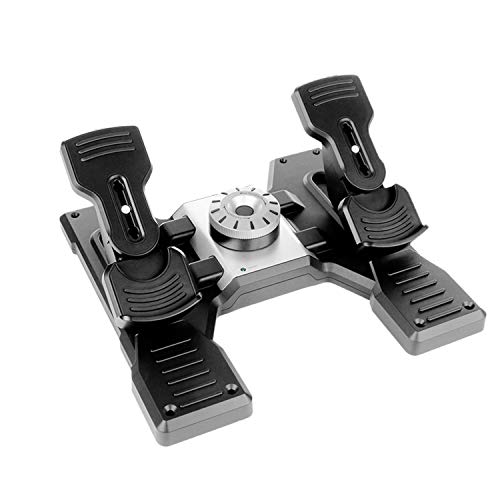
- Mid-Range
- Toe brakes
- PC
This page contains affiliate links. As an Amazon Associate we earn from qualifying purchases.
MSFS Performance Score
- Sensors25% 40
- Adjustability25% 100
- Build Quality20% 50
- Platforms15% 50
- Toe Brakes15% 100
Biggest contributor: adjustability (25% of the score), rated 100/100. How we score
Verdict for MSFS
The Logitech G Pro Flight Rudder Pedals suit a first set on PC, moving nose-steering off a twist grip and onto your feet, with separate left and right toe brakes for swinging a taildragger around the ramp. Logitech doesn't state the sensor type, and they're PC-only.
Updated October 2026
Pros & Cons for MSFS
Strengths
- Spring tension is adjustable, so you can firm the rudder up for the steady pressure that holds the centerline on a gusty takeoff roll, or soften it for the small, constant nudges of a crosswind landing.
- Separate left and right toe brakes (differential braking means you press one pedal to brake just that wheel) let you pivot a taildragger in a tight parking spot or hold the wheels still for a run-up.
- The pedals adjust to your feet, which matters if you fly long legs or hover a helicopter, where your feet hold the nose steady for minutes at a time next to any PC stick or yoke.
Trade-offs
- Logitech doesn't claim contactless (Hall-effect, magnet-based) sensors, and sensors without them can drift or get jittery as they age, so the nose may twitch on short final until you recalibrate or add a small dead zone.
- Logitech lists a 9-bit rudder axis and 7-bit toe brakes, coarser steps than the 16-bit sensors on pricier pedals, so very fine inputs — a feather-light brake tap, a tiny tail-rotor correction in a hover — arrive in bigger jumps.
Full Specifications
- Sensors
- Not stated by the maker
- Toe brakes
- Yes, left and right
- Adjustable tension
- Yes
- Adjustable pedals
- Yes
- Works on
- PC
- Released
- 2016
Frequently Asked Questions
Is this a good Rudder Pedals for MSFS?
Yes, for a first set of pedals on PC they do the job, scoring 67.5/100 for MSFS. They shine the moment you turn off auto-rudder and start holding the centerline yourself, and the separate toe brakes make taxiing and taildraggers far less of a fight. They show their limits in the fine detail: the rudder and brake axes report in coarser steps than costlier pedals, and the sensor type isn't stated.
Is it worth the price for MSFS?
For the money you get the two things that matter most on day one — a real rudder axis under your feet and independent toe brakes — plus adjustable tension and pedal fit. The next step up in price mainly buys contactless sensors, finer axis resolution, heavier frames and console compatibility, none of which change what you can fly, only how precise and long-lived it feels.
Does it work on Xbox or PS5?
They're PC only, connecting by USB to a Windows machine running MSFS 2024, where popular pedals load a ready-made control profile. MSFS also runs on Xbox Series X|S and PS5, but pedals never plug into a console — they have to route through a licensed stick or yoke from the same brand, so these aren't a console option, and Xbox Cloud Gaming doesn't support pedals at all.
What else do I need with it?
They sit alongside whatever you already fly with — a stick or a yoke, and ideally a separate throttle so your hands aren't doing two jobs at once. Put something under them: a rubber mat, a strip of carpet gripper or a simple rig, because pedals that creep forward during a long taxi will have you chasing them instead of the centerline.
How should I configure this in MSFS?
In MSFS, assign the rudder axis and both toe brakes, then turn off the auto-rudder assist so the sim stops steering for you. If the nose twitches in cruise, add a small dead zone or soften the sensitivity curve for the rudder axis, and set the spring tension and pedal position before your first flight so your heels rest naturally and you're not holding pressure all the way down the runway.