The best graphics card for VR for most people is the Radeon RX 9070 XT (16GB). It's nearly as fast as an RTX 5070 Ti at 4K for hundreds less, and it works with Quest 3, PS VR2 on PC and Pimax headsets. Prefer NVIDIA? Get the RTX 5070 Ti. For a high-resolution Pimax, the RTX 5080. Whatever you buy, get 16GB of graphics memory, and skip Intel Arc if you use a Quest.
 Best for most VR playersRX 9070 XT
 Best NVIDIA card for VRRTX 5070 Ti
 For high-resolution headsetsRTX 5080
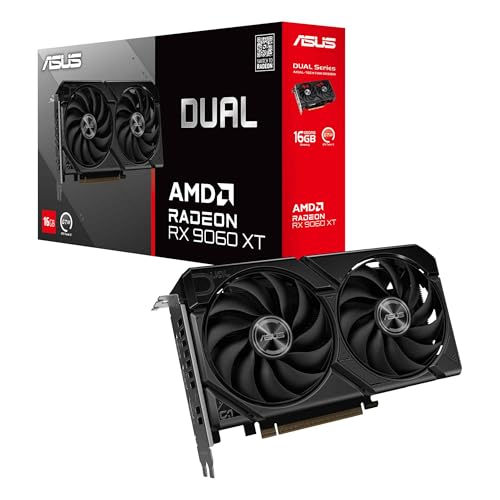 Cheapest 16GB cardRX 9060 XT 16GB
 The fastest, if money is no objectRTX 5090
Which graphics card does your headset need?
Every headset maker publishes the cards it supports. Here's the line each one draws, and what we'd buy to fly and play comfortably:
| Headset | Maker's minimum | Maker's recommendation | Our pick |
|---|---|---|---|
| Meta Quest 3 / 3S (PC, by cable or Air Link) | Cards as old as a GTX 970 are on Meta's list | RTX 20 series / RX 6000 series | RX 9070 XT, or RTX 5070 Ti for NVIDIA |
| PlayStation VR2 (PC, with Sony's adapter) | GTX 1650 / RX 5500 XT | RTX 3060 / RX 6600 XT | RX 9060 XT 16GB or faster |
| Pimax Crystal Light | RTX 2070 / RX 5700 XT class | RTX 3080 or 4070 / RX 6800 XT class | RX 9070 XT or RTX 5070 Ti |
| Pimax Crystal Super | RTX 4070 Ti and up | RTX 5080 |
Makers' minimums are for simple games. A headset has to draw two high-resolution pictures, one per eye, 72 to 120 times a second, so flight sims and other big games need far more than the minimum. Here's how much work each headset asks for, compared with a monitor:
- 1440p monitor2560 × 1440 at 60 fps 1×
- 4K monitor3840 × 2160 at 60 fps 2.3×
- Meta Quest 3Two 2064 × 2208 at 90 Hz 3.7×
- Pimax Crystal LightTwo 2880 × 2880 at 90 Hz 6.8×
- Pimax Crystal SuperTwo 3840 × 3840 at 90 Hz 12.0×
Two connection rules: PS VR2 and Pimax headsets plug into a DisplayPort on the graphics card (PS VR2 needs DisplayPort 1.4; every card on this page has it). And Meta says Intel Arc cards don't work with Quest Link at all.
How the graphics cards compare for VR
A headset draws more pixels than a 4K monitor, so 4K results are the best guide to VR. Here are today's cards, from independent tests:
- GeForce RTX 5090 32GB 100%
- GeForce RTX 5080 16GB 70%
- GeForce RTX 5070 Ti 16GB 62%
- Radeon RX 9070 XT 16GB 59%
- Radeon RX 9070 16GB 52%
- GeForce RTX 4070 Ti 12GB · Pimax’s minimum for the Crystal Super 49%
- GeForce RTX 5070 12GB 49%
- GeForce RTX 5060 Ti 16GB 16GB 36%
- Radeon RX 9060 XT 16GB 16GB · Not on Meta’s Quest Link list 32%
- GeForce RTX 5060 Ti 8GB 8GB 25%
- Intel Arc B580 12GB · Not on Meta’s Quest Link list 25%
- GeForce RTX 3060 12GB 12GB · Sony’s recommendation for PS VR2 on PC 20%
- GeForce RTX 5060 8GB 20%
Two things stand out. The RX 9070 XT and RTX 5070 Ti are almost tied, and the 9070 XT costs much less. And the RTX 5060 Ti 8GB and RTX 5060 fall to the bottom at 4K, a sign they're running out of memory, which is the next point.
The 5 best graphics cards for VR
Ranked for VR players in general, with flight sims, the most demanding VR games, in mind. All five were in stock on Amazon when we checked:
Best for most VR players
Radeon RX 9070 XT 16GB
The one we link to: ASUS Prime OC
Nearly as fast as an RTX 5070 Ti at 4K for hundreds less, with the 16GB of memory VR wants. It's on Meta's list for Quest Link, and it reaches Microsoft's top "Ideal" graphics level for MSFS 2024.
4K performance59% of the fastest card- Graphics memory
- 16GB
- Good for
- Quest 3 / 3S, PS VR2, Pimax Crystal Light
- Quest Link
- Supported
- Budget
- $800 to $900
Pros
- Within a few percent of the RTX 5070 Ti at 4K in independent tests
- 16GB of graphics memory
- Works with Quest (Link), PS VR2 on PC and Pimax headsets
Cons
- For the Pimax Crystal Super, Pimax names only NVIDIA cards
Skip it if you own a Pimax Crystal Super or want the highest settings in flight sims: go for the RTX 5080.
Check price on AmazonBest NVIDIA card for VR
GeForce RTX 5070 Ti 16GB
The one we link to: ASUS Prime OC (SFF-Ready)
The NVIDIA pick: a touch faster than the RX 9070 XT at 4K, with 16GB of memory, and fast enough for Pimax's top requirement (an RTX 4070 Ti or better). It costs about $400 more right now.
4K performance62% of the fastest card- Graphics memory
- 16GB
- Good for
- Quest 3 / 3S, PS VR2, Pimax Crystal Light and Super
- Quest Link
- Supported
- Budget
- $1,150 to $1,300
Pros
- 62% of the RTX 5090's 4K speed, the most here below the RTX 5080
- 16GB of graphics memory
- Meets Pimax's bar for the Crystal Super
Cons
- Costs far more than the RX 9070 XT for a small speed gain
Skip it if price matters more than a few percent of speed: the RX 9070 XT is almost as fast.
Check price on AmazonFor high-resolution headsets
GeForce RTX 5080 16GB
The one we link to: MSI Ventus 3X OC
For sharp, high-resolution headsets like the Pimax Crystal Super, or for flight sims at the highest settings. About 13% faster than the RTX 5070 Ti at 4K.
4K performance70% of the fastest card- Graphics memory
- 16GB
- Good for
- Every headset, including the Pimax Crystal Super
- Quest Link
- Supported
- Budget
- $1,650 to $1,850
Pros
- 70% of the RTX 5090's 4K speed for a fraction of its price
- Headroom for 4K-per-eye headsets
- 16GB of graphics memory
Cons
- Same 16GB as the cheaper cards
- A big card: check your case and the maker's recommended power supply
Skip it if your headset is a Quest 3 or PS VR2: the RX 9070 XT or RTX 5070 Ti is plenty.
Check price on AmazonCheapest 16GB card
Radeon RX 9060 XT 16GB
The one we link to: ASUS Dual
The cheapest way to get 16GB of memory, and well above Sony's recommendation for PS VR2 on PC. But Meta's list of cards for Quest Link doesn't name it, so Quest owners should pick the RX 9070 XT.
4K performance32% of the fastest card- Graphics memory
- 16GB
- Good for
- PS VR2 on PC, lighter games on Pimax
- Quest Link
- Not on Meta’s list
- Budget
- $500 to $550
Pros
- 16GB of memory at the lowest price
- Above Sony's recommended card for PS VR2 (an RTX 3060)
Cons
- Not on Meta's Quest Link list
- Half the 4K speed of the RX 9070 XT: lower settings in flight sims
Skip it if you have a Quest headset, or you fly MSFS 2024 in VR.
Check price on AmazonThe fastest, if money is no object
GeForce RTX 5090 32GB
The one we link to: ASUS TUF Gaming OC
The fastest graphics card you can buy, with 32GB of memory. But it's scarce, and Amazon's prices for it are more than four times the RTX 5080's right now, for about 43% more speed at 4K.
4K performance100% of the fastest card- Graphics memory
- 32GB
- Good for
- Every headset at the highest settings
- Quest Link
- Supported
- Budget
- Over $7,000
Pros
- The fastest card in every test
- 32GB of graphics memory
Cons
- Costs more than four times as much as an RTX 5080 right now
- Scarce, and a very big card: check your case and power supply
Skip it if you're not chasing the very highest settings on a Pimax Crystal Super.
Check price on Amazon
Buttons go to Amazon, where you’ll see today’s price and stock. As an Amazon Associate we earn from qualifying purchases; it never changes what we recommend. 4K performance is the average of independent tests at 4K, as a share of the fastest card (the RTX 5090). Budget bands and Meta’s list checked October 2026.
How much graphics memory do you need for VR?
16GB. On a monitor, 8GB is still enough for most games. But the higher the resolution, the more memory a game needs, and a headset runs at more than 4K. When a card runs out, it slows down sharply. You can see it by comparing the same chip sold with 8GB and with 16GB:
GeForce RTX 5060 Ti: 8GB vs 16GB
- 1080p +5%
- 1440p +7%
- 4K +43%
Radeon RX 9060 XT: 8GB vs 16GB
- 1080p +5%
- 1440p +8%
- 4K +18%
At 1080p the 16GB RTX 5060 Ti is just 5% faster than the 8GB one. At 4K it's 43% faster. For flight sims, Microsoft's top "Ideal" spec for MSFS 2024 already asks for 12GB, so 16GB is the safe choice for VR, and 12GB the least we'd buy.
NVIDIA or AMD for VR?
Both work. What matters is your headset's list:
- Quest 3 and 3S: Meta's list names NVIDIA's RTX 20, 30, 40 and 50 series, and AMD's RX 6600 XT and up, the RX 7000 series, and the RX 9070 and 9070 XT. It doesn't name the RX 9060 XT, and Meta says Intel Arc isn't supported.
- PS VR2 on PC: Sony supports NVIDIA from the GTX 1650 and AMD from the RX 5500 XT, so any card on this page works.
- Pimax: its lists cover both brands. For the Crystal Super, Pimax names NVIDIA cards from the RTX 4070 Ti up, so that's where we'd stay.
So for most headsets, buy on speed and memory for the money. Right now that makes the RX 9070 XT the value pick, and the RTX 5070 Ti the choice if you want NVIDIA or a Crystal Super.
Graphics cards to skip for VR right now
- Any 8GB card (RTX 5060, RTX 5060 Ti 8GB, RX 9060 XT 8GB). Fine for a 1080p monitor, but they fall behind at VR resolutions, as the chart above shows.
- The RTX 5070 (12GB). A good card, but on Amazon it costs about the same as the RX 9070 XT, which is about 20% faster at 4K and has 16GB.
- The RTX 5060 Ti 16GB. It has the memory, but it costs nearly as much as the RX 9070 XT, which is about 60% faster at 4K. Only buy it on a good sale.
- Intel Arc, if you use a Quest: Meta says it isn't supported for Quest Link.
- "VR-ready" stickers. It's a marketing label, not a standard. Check your headset maker's list instead.
Flight sims in VR need the most
Flight simulators are among the hardest things you can run in VR: a whole planet streaming in, detailed cockpits, and every gauge has to stay readable. Microsoft publishes no separate VR spec for MSFS 2024, so we use its top "Ideal" spec as the floor: an RTX 4080 or RX 7900 XT class card with 12GB. In independent tests, the RX 9070 XT, RTX 5070 Ti, RTX 5080 and RTX 5090 all reach that level; the RX 9060 XT doesn't.
The graphics card isn't the whole story, though:
- Processor. MSFS leans hard on the CPU, in VR even more. See the best CPUs for MSFS.
- Memory. 32GB of RAM, Microsoft's recommendation for MSFS 2024.
- The headset. Our guide to VR headsets for flight sims explains which are sharp enough to read cockpit gauges.
Buying a whole PC instead? Here are the best PCs for MSFS 2024, and the best graphics cards for MSFS on a monitor.
All five side by side
| Graphics card | 4K performance | Memory | Good for | Quest Link | Budget |
|---|---|---|---|---|---|
| 1RX 9070 XT | 59% | 16GB | Quest 3 / 3S, PS VR2, Pimax Crystal Light | Supported | $800 to $900 |
| 2RTX 5070 Ti | 62% | 16GB | Quest 3 / 3S, PS VR2, Pimax Crystal Light and Super | Supported | $1,150 to $1,300 |
| 3RTX 5080 | 70% | 16GB | Every headset, including the Pimax Crystal Super | Supported | $1,650 to $1,850 |
| 4RX 9060 XT 16GB | 32% | 16GB | PS VR2 on PC, lighter games on Pimax | Not on Meta’s list | $500 to $550 |
| 5RTX 5090 | 100% | 32GB | Every headset at the highest settings | Supported | Over $7,000 |
Check your PC before you buy
- Find your current card. On Windows, press Ctrl + Shift + Esc, open the Performance tab and click GPU. The name is at the top right.
- Check your headset maker's list. Meta, Sony and Pimax all publish the cards they support.
- Check the space and the power. Fast cards are long and power-hungry. Measure your case, and check the card maker's recommended power supply before you order.
- Check the ports. Tethered headsets need a free DisplayPort; a Quest on a cable needs a fast USB port on the PC.
How we chose these cards
We don't test graphics cards ourselves. Speed figures are averages of independent tests published in June 2026 (4K, as a share of the RTX 5090). Headset requirements are Meta's, Sony's and Pimax's own lists, and Microsoft's for MSFS 2024. We checked the lists, Amazon stock and prices (for the budget bands) on October 8, 2026. Prices move fast, so the button shows today's.