Rudder Pedals · X-Plane 12
Logitech G Pro Flight Rudder Pedals
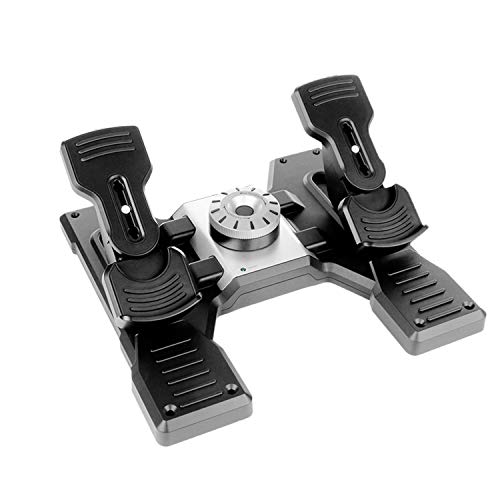
- Mid-Range
- Toe brakes
- PC
This page contains affiliate links. As an Amazon Associate we earn from qualifying purchases.
X-Plane 12 Performance Score
- Sensors25% 40
- Adjustability25% 100
- Build Quality20% 50
- Platforms15% 50
- Toe Brakes15% 100
Biggest contributor: adjustability (25% of the score), rated 100/100. How we score
Verdict for X-Plane 12
The Logitech G Pro Flight Rudder Pedals suit a first-time pedal buyer on PC, adding separate left and right toe brakes so you can brake one wheel and pivot a taildragger on the ramp. The trade-off: Logitech doesn't state the sensor type, so expect a calibration or a small dead zone over time.
Updated October 2026
Pros & Cons for X-Plane 12
Strengths
- Left and right toe brakes work separately (differential braking, meaning one wheel at a time), so in X-Plane 12 you can nudge the right brake to hold the centerline on a gusty takeoff roll and swing a taildragger around at the end of the taxiway without touching the steering tiller.
- Spring tension is adjustable and the pedals adjust to your feet, so you can firm them up for the small, steady pressure that holds a crosswind landing straight, or back them off for the long, light yaw holds of a helicopter hover.
- A sensible first set next to any stick or yoke on PC: once rudder and both brakes are assigned as axes, you keep the ball centered in a climbing turn with your feet instead of twisting a grip, which is where X-Plane's flight model starts to feel like the real airplane.
Trade-offs
- Logitech doesn't say these use contactless (Hall-effect) sensors, the kind that read pedal position without parts touching, so after plenty of hours the rudder axis can get jittery and twitch the nose during a long final; a recalibration or a small null zone per axis in X-Plane usually settles it.
- Logitech lists a 9-bit rudder axis and 7-bit toe brakes, coarser steps than the 16-bit sensors you get by moving up, so very fine brake modulation on a short wet runway arrives in slightly bigger jumps than a smoother axis would give you.
Full Specifications
- Sensors
- Not stated by the maker
- Toe brakes
- Yes, left and right
- Adjustable tension
- Yes
- Adjustable pedals
- Yes
- Works on
- PC
- Released
- 2016
Frequently Asked Questions
Is this a good Rudder Pedals for X-Plane 12?
Yes, for a PC simmer buying a first set of rudder pedals to go beside a stick or yoke, and they score 67.5/100 for X-Plane 12. They shine on the ground and in the circuit: separate toe brakes for taxi turns, adjustable tension for holding the centerline in a crosswind, and X-Plane's per-axis curves and null zones to tidy up the response. They show their limits in the fine detail, since the sensor type isn't stated and the listed axis resolution is coarser than pedals costing more.
Is it worth the price for X-Plane 12?
For the money you get the three things that actually change how you fly X-Plane 12: a real rudder axis, separate toe brakes and adjustable tension. The next step up in price mostly buys contactless sensors, finer axis resolution and heavier frames, which matter more once you've flown a lot of hours on pedals.
What does it need to work?
They're a PC-only set, so they connect over USB to a free port on the machine running X-Plane 12. That's not a real restriction here anyway, since X-Plane 12 isn't on Xbox or PS5; you just plug them in alongside whatever stick or yoke you already use.
What else do I need with it?
They're the third piece, not the first: pair them with a stick or yoke for pitch and roll, and a throttle so your hands stay put during the takeoff roll. Put them on a mat or clamp them to a rig, because pedals that creep forward under the desk will quietly bleed rudder authority right when you need it on landing.
How should I configure this in X-Plane 12?
In X-Plane 12, assign the rudder as one axis and each toe brake as its own axis, then turn off the auto-rudder assist so the sim stops correcting for you. If the nose twitches when your feet are still, add a small null zone (dead area around center) or soften the response curve on the rudder axis, and set the spring tension and pedal fit to suit your legs before you calibrate, not after.