Rudder Pedals · X-Plane 12
Turtle Beach VelocityOne Rudder Pedals
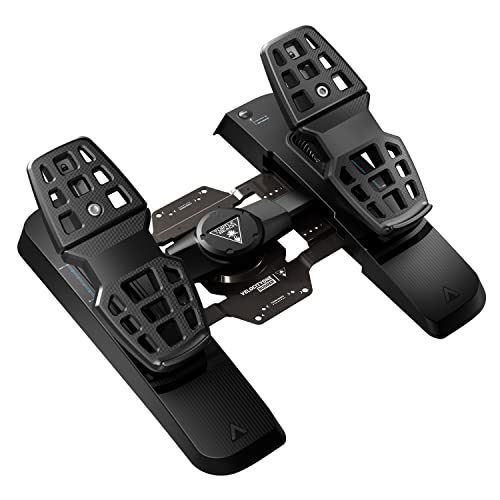
- Mid-Range
- Hall-effect sensors
- Toe brakes
- PC and Xbox
This page contains affiliate links. As an Amazon Associate we earn from qualifying purchases.
X-Plane 12 Performance Score
- Sensors25% 100
- Adjustability25% 100
- Build Quality20% 50
- Platforms15% 100
- Toe Brakes15% 100
Biggest contributor: sensors (25% of the score), rated 100/100. How we score
Verdict for X-Plane 12
The Turtle Beach VelocityOne Rudder suits X-Plane 12 flyers stepping up from a twist grip, with contactless magnetic (Hall effect) sensors that hold tiny rudder inputs steady on the takeoff roll. On Xbox they connect through the VelocityOne Flight, not the console itself; on PC it is plain USB.
Updated October 2026
Pros & Cons for X-Plane 12
Strengths
- The Hall effect sensors read pedal position with magnets instead of rubbing contacts, so the half-inch corrections that keep you on the centerline in a gusty crosswind land where you put them, and there is no worn spot at center to make the nose wander.
- Separate left and right toe brakes mean you can brake one wheel at a time, which is how you swing a taildragger around on the ramp or hold the nose straight on a fast taxi to the gate; X-Plane 12 lets you assign each brake as its own axis.
- Adjustable spring tension and pedals that adjust to your feet make them a sensible match for a PC simmer who already flies a stick or a yoke and wants the feet involved, from light rudder for a helicopter hover to firmer pressure in a climbing turn.
Trade-offs
- On a console they plug into the Turtle Beach VelocityOne Flight rather than into the console itself, and the maker lists PC and Xbox only, so Mac flyers running X-Plane 12 should confirm support before buying.
- Turtle Beach does not publish what the frame and pedals are made from, so you are buying on the sensor and adjustment specs rather than stated materials; the next step up in price is where you find published metal construction and heavier, damped rudder travel.
Full Specifications
- Sensors
- Hall effect (contactless)
- Toe brakes
- Yes, left and right
- Adjustable tension
- Yes
- Adjustable pedals
- Yes
- Works on
- PC, Xbox
- On a console
- Plugs into the VelocityOne Flight (Xbox)
- Released
- 2022
Frequently Asked Questions
Is this a good Rudder Pedals for X-Plane 12?
Yes, they score 90.0/100 for X-Plane 12 and suit anyone flying GA singles, taildraggers or helicopters who is tired of twisting a grip for rudder. They shine on the ground and in the flare, where contactless magnetic sensors and separate toe brakes let you steer with your feet and brake one wheel at a time. They show their limits if you want published metal build details or the heavier, damped feel of pedals that cost more.
Is it worth the price for X-Plane 12?
For the money you get contactless magnetic sensors, adjustable tension and true differential toe brakes, which is the combination that matters most in X-Plane 12. Simpler pedals can drop one of those three, and the next step up in price mostly buys stated metal construction and heavier travel rather than better input.
What does it need to work?
For X-Plane 12 they plug straight into a PC over USB, which is all you need since the sim runs on Windows PC and Mac and is not on Xbox or PS5. On Xbox they do not connect to the console directly; they run through the Turtle Beach VelocityOne Flight, so that route only matters if you also fly a console sim.
What else do I need with it?
Pair them with a stick or a yoke and a throttle, since the pedals only cover rudder and braking. Put a rubber mat or a simple rig under them so they do not creep across the floor when you stand on the brakes, and sit so your heels rest on the ground with knees slightly bent.
How should I configure this in X-Plane 12?
In X-Plane 12, assign the rudder axis and both toe brakes as separate axes, then turn off the auto-rudder assist so the sim stops steering for you. If the nose twitches on the takeoff roll, add a small null zone at center or soften the response curve, and back off the spring tension and reset the pedal position to your feet so your legs can hold light pressure without tensing.